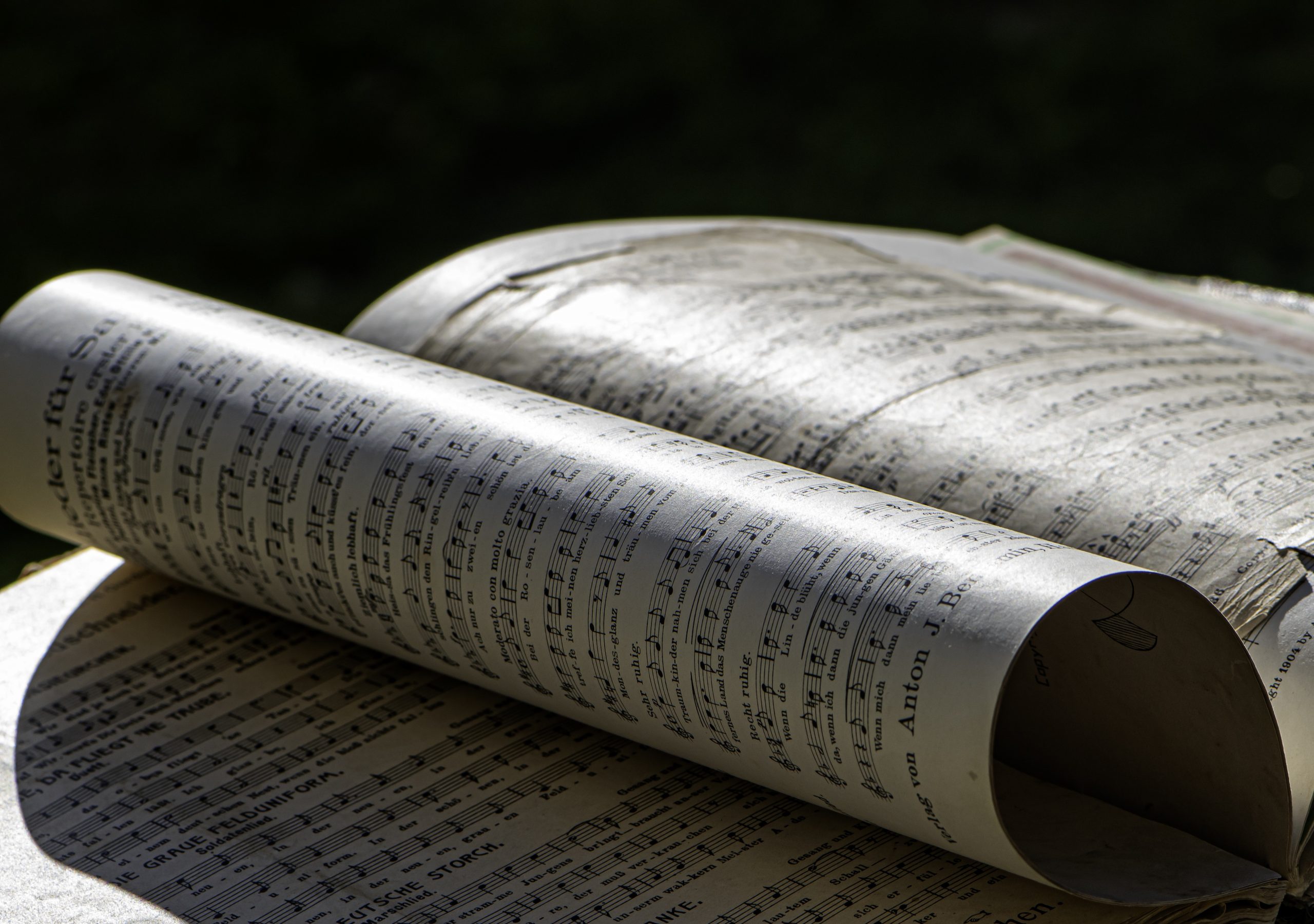
A few years ago, out of desperation, I tweeted something like: “Dear Authors. Stop. Quoting. Song lyrics. You probably don’t have permission. You definitely can’t afford it. Just stop!”
This cry of pain went semi-viral and was commented on by hundreds of people. Neil Gaiman weighed in by explaining how much he paid for rights to quote lyrics in one of his books and then had to renegotiate again for rights to quote in an ebook version. Mountain Goats said anyone could use their lyrics for free. And Hank Green made a TikTok quoting me and saying how much he had to pay for quoting lyrics in two of his books.
I’m a copyeditor for scholarly nonfiction in the humanities, and I run into quoted song lyrics at least once a month, sometimes more often. This is an immediate red flag conversation with a client. (On a side note, I seem to deal with this more than any other editor I know, which makes me think I’m a magnet for lyrics. It’s mystifying.)
What’s the big deal with quoting song lyrics? Isn’t it fair use?
Sadly, quoting song lyrics does not necessarily fall under fair use principles. The music industry has an entirely different copyright system. If you are quoting a line of a song—even just two or three words—that might be a significant portion of the total words of that song (a substantial quote). If you plan to make money from your publication (selling books), then the rights holder can litigate for a portion of that income. You would do well to tread lightly.
The music industry is also very litigious, and it has every right to come after an author who quotes lyrics but doesn’t have permission to do so.
Remember, too: The artist who wrote the song isn’t always the copyright holder. For example, Bob Dylan sold his entire catalog to Universal Music Group, so you have to contact Universal to get permission to quote any of his lyrics.
But I cited my source!
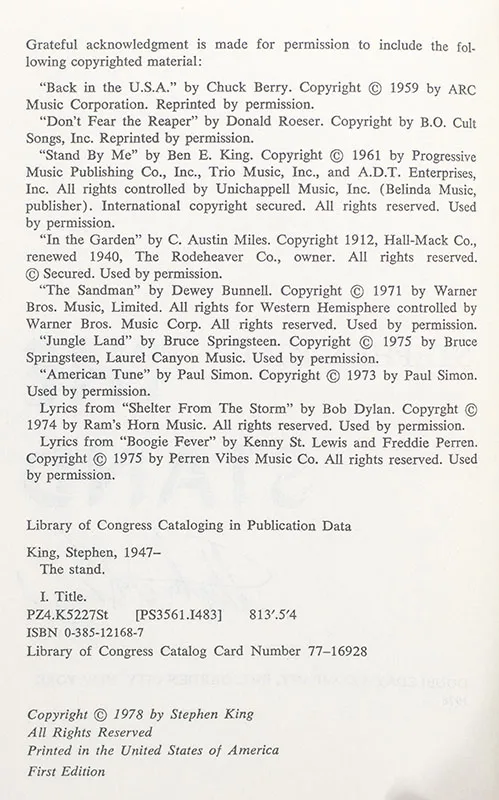
Simply citing the source of the lyrics is not sufficient. You need explicit written permission to quote, and you must cite that permission somewhere in your publication (usually the copyright page for a book, perhaps in a footnote in an article). Below is a copyright page from Stephen King’s The Stand. Note the formal legalese in each permission.
Won’t the publisher handle it?
Publishers generally do not go about getting permissions or footing the bill, which can be in the thousands (and tens of thousands) of dollars. They may direct an author on how to go about it, but it is the author’s responsibility to secure permissions and pay those fees.
What else can I do?
There are a few options for authors:
- You could quote something in the public domain.
- You could write your own “song” (music not required!) and quote those lyrics.
- You could mention the title of the song (this is fine) and imply the lyrics if they are well known.
Remember that the feelings you get from hearing music and lyrics is very subjective and may not feel the same to readers, even if some songs have a generational feeling.
Editors should be an advocate for authors and encourage alternate ways of getting the point across without quoting song lyrics.
Resources
Andre Calilhanna, “How to Legally Quote Song Lyrics in Your Book,” https://blog.bookbaby.com/how-to-write/writing-tips/lyrics-in-books
Adam Mitzer, “Using Song Lyrics in Your Novel (Spoiler Alert: You probably have to pay for it),” https://www.sidebarsaturdays.com/2016/08/06/using-song-lyrics-in-your-novel-spoiler-alert-you-probably-have-to-pay-for-it/
Judy Penz Sheluk, “Let’s Talk About Writing Using Song Lyrics,” https://judypenzsheluk.com/2022/01/22/lets-talk-about-writing-using-lyrics/
About Laura Poole
Laura Poole has been editing full-time since 1996. Her company is Archer Editorial Services, Inc., founded in 1997. She specializes in scholarly nonfiction copyediting in the humanities (books and journals) and provides training for publishers and editors. She currently serves on the ACES Awards Committee as head judge for the Robinson Prize.


Leave a Reply