
- Don’t expose your copyrighted work to inclusion in data sets by uploading it in queries that the LLMs* store and will use in replies to other users
- LLMs suggest very dull average writing, and our clients are not dull and average, so the output is unsuitable for your work
- LLMs still make up too many facts and sources
- Verifying claims from LLM output takes longer than looking up the facts in the first place
- Our experience and expertise make human editors much faster at editing than the LLMs are
- We are better at detecting and correcting misplaced modifiers and other intricate grammatical and punctuation issues than the LLMs are
- We avoid any unintentional plagiarism resulting from the LLM inserting into your work material from content it was trained on
- Humans require a far less water per edit and use almost no electricity to work
- To get custom answers and solutions tailored to your work and your voice, not average solutions pulled from the LLM’s training set
- We actually read your work, and we read all of it to inform our suggestions
There are reasons and circumstances under which we would consider using LLMs during editing, and having the client’s permission tops that list.
*The large language models (LLMs) are widely called AI, but they actually are not artificial intelligence at all, they are glorified predictive text engines
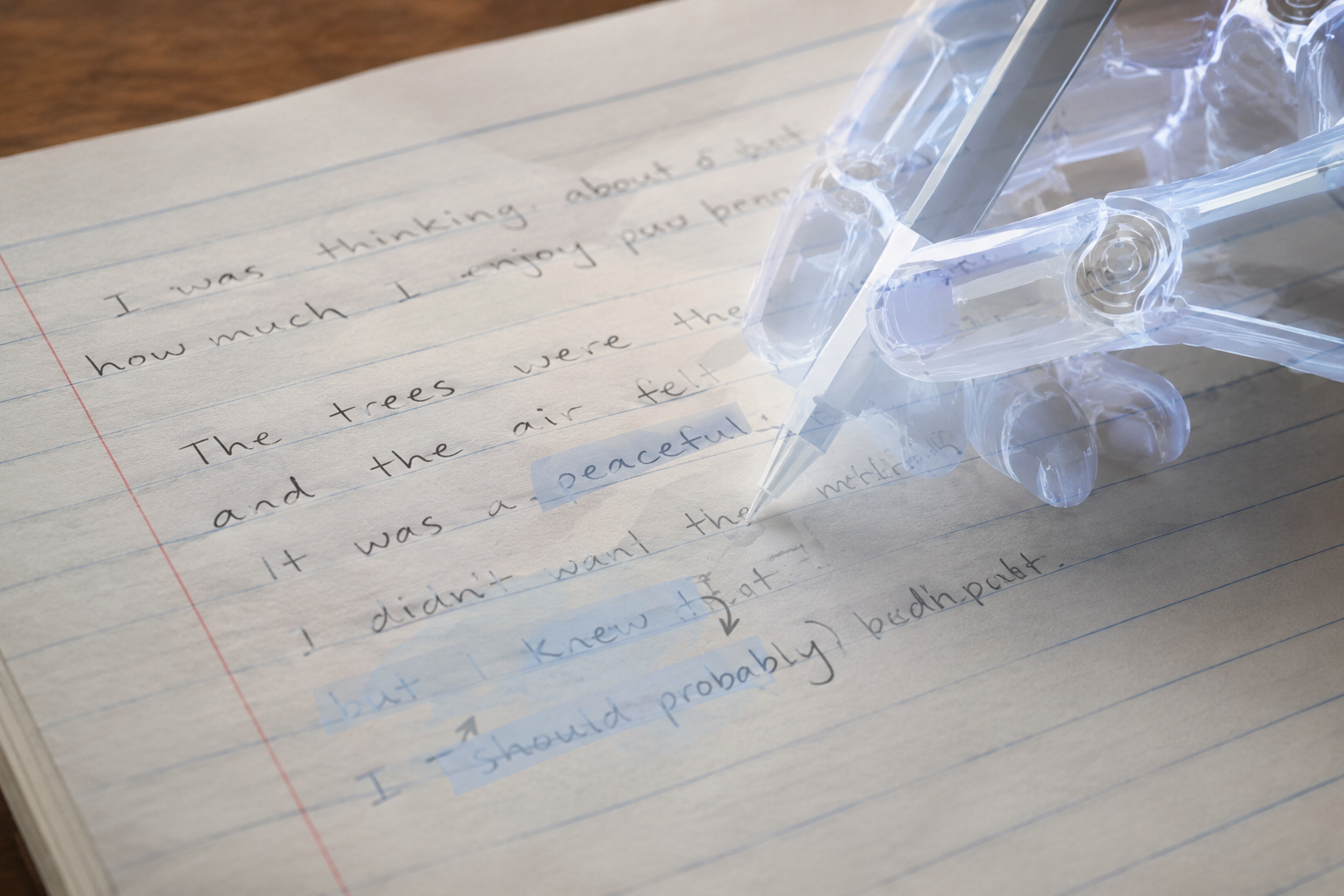
Image created using ChatGPT and between 60 and 500 mL of water and unestimated electricity and training materials. Use cases are nuanced!
Adrienne is an award-winning certified copyeditor and part of The Quad “mastermind” group—a collection of senior editors who support each other’s learning and business development (informally, up until this website). Find Adrienne teaching editing at Canadian universities or online as SciEditor. They’ve written more than 900 blog posts aimed at helping other editors, and a few dozen to help clients. Best-known of these are their Editor Vs AI series and their instant estimator for time and cost.
Author photo by Coady Nikerson.