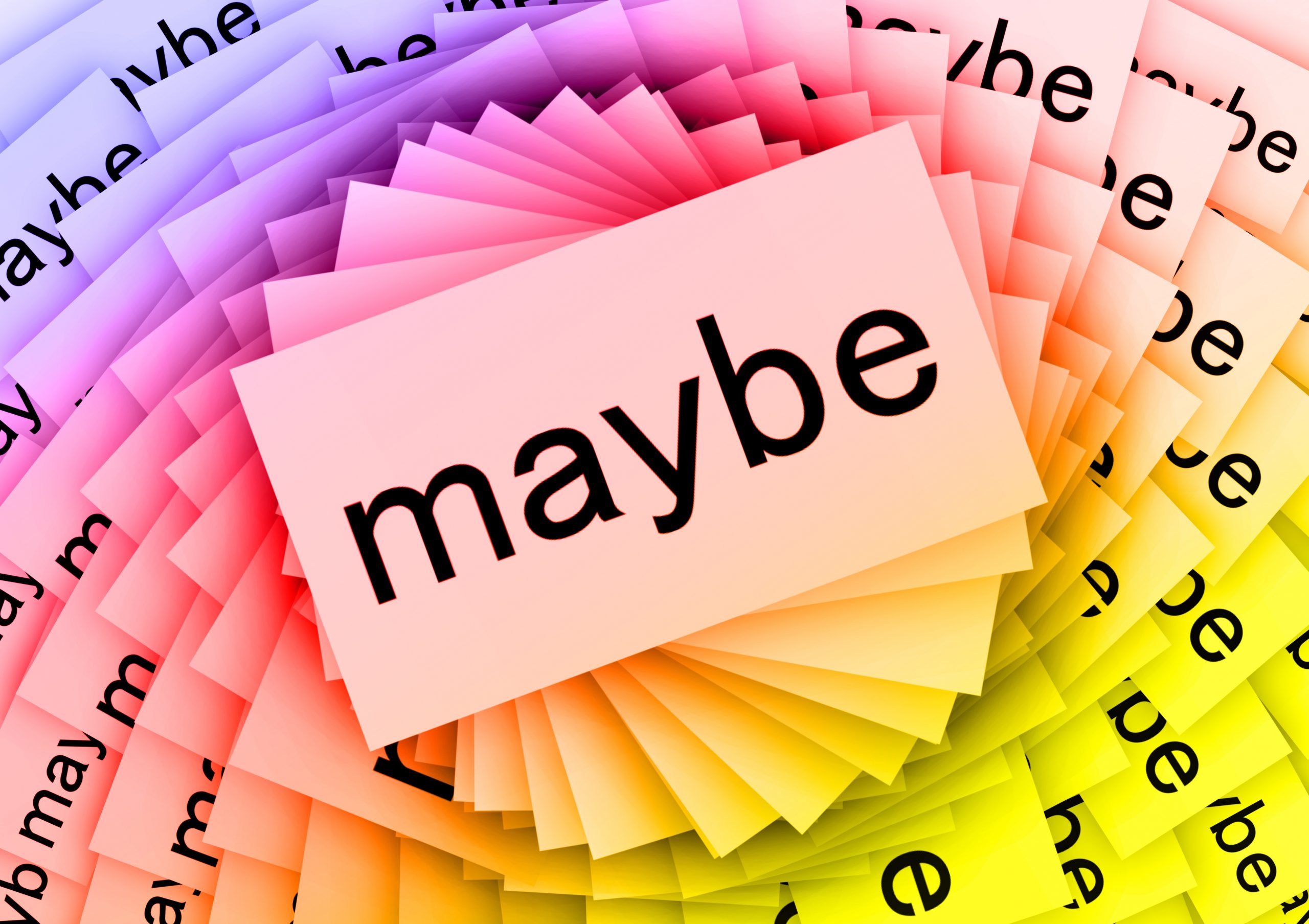
“It depends!”
I need a button I can press to say this, it is so often my answer to editing and proofreading students.
Aside from a handful of inalienable grammar rules, everything else depends.
- Use incomplete sentences? It depends!
- Cite sources for quotes? It depends!
- Need permission to quote other pubs? It depends!
- Need a comma before the final “and” in a list? It depends!
- Spell out numbers under 100? It depends!
- Use spaces around em dashes? It depends!
- Capitalize Very Important Words? It depends!
What does it depend on? Why, the style being followed, naturally. And that style is up to the author and the publisher—whether it’s a trade publisher, a company, an individual, or a combination of those.
English rules we can’t break
So what are these “inalienable” grammar rules? These are the standards which, if the text deviates from them, readers will take pause, be confused, and question the validity of the rest of the content. I asked around among the senior editors I know and came up with this short list:
- Subject & verb must always agree
- Adjectives appear in the royal order
- Apostrophes never make words plural
- Non-parallel structure stops the reader
- Modifiers should be closest to the word they are modifying
- Punctuation must end a sentence in body text
- Don’t add periods to other punctuation
- Never triple a contraction
Consider this example full of errors:
The fluffy white, tiny Easter bunnies hopped wildly through the garden’s, their baskets overflowing. Laughter—from the children—, echoed loudly. You wouldn’t’ve thought a forest could echo. They’re leaping over fences, nibbling on carrots. and somehow always manage to leave a trail of glittery chaos wherever it go. You might not believe it but I’d.
[If this example will keep you up at night, you might be an editor! Yet even some of these rules can be broken in the name of character development, with appreciable results.]
How editors handle the flux
One of the most important things all editors learned early in their training is that the rules our school teachers instilled in us might not be rules at all. Next thing we learn is “look it up.” And that’s what we do. Top editors look up every instinct, every assumption, every change they suggest. They inform the writer of broadly accepted standards so the writer can make informed decisions. But we don’t impose changes; those are up to the writer/ publisher/ department head—whoever is the boss.
Adrienne is an award-winning certified copyeditor and part of The Quad “mastermind” group—a collection of senior editors who support each other’s learning and business development (informally, up until this website). Find Adrienne teaching editing at Canadian universities or online as SciEditor. They’ve written more than 900 blog posts aimed at helping other editors, and a few dozen to help clients. Best-known of these are their Editor Vs AI series and their instant estimator for time and cost.
Subscribe to get notified by email when there is a new post

Author photo by Coady Nikerson.